
Autonomous vehicles are reshaping transportation as we know it. Behind the scenes, telemetry technology plays a crucial role in making self-driving cars safe and efficient. This article explores how telemetry systems work in autonomous vehicles and why they matter for the future of mobility.
Understanding Telemetry in Autonomous Vehicles
Telemetry refers to the automatic collection and transmission of data from remote sources. In autonomous vehicles, telemetry systems gather information from various sensors and components. This data flows continuously to processing units that make split-second driving decisions.
Modern self-driving cars generate massive amounts of data every second. They collect information about speed, location, surrounding objects, and vehicle health. Therefore, telemetry serves as the nervous system of autonomous vehicles, connecting all parts into a cohesive whole.
Core Components of Vehicle Telemetry Systems
Autonomous vehicle telemetry relies on multiple interconnected components working together seamlessly.
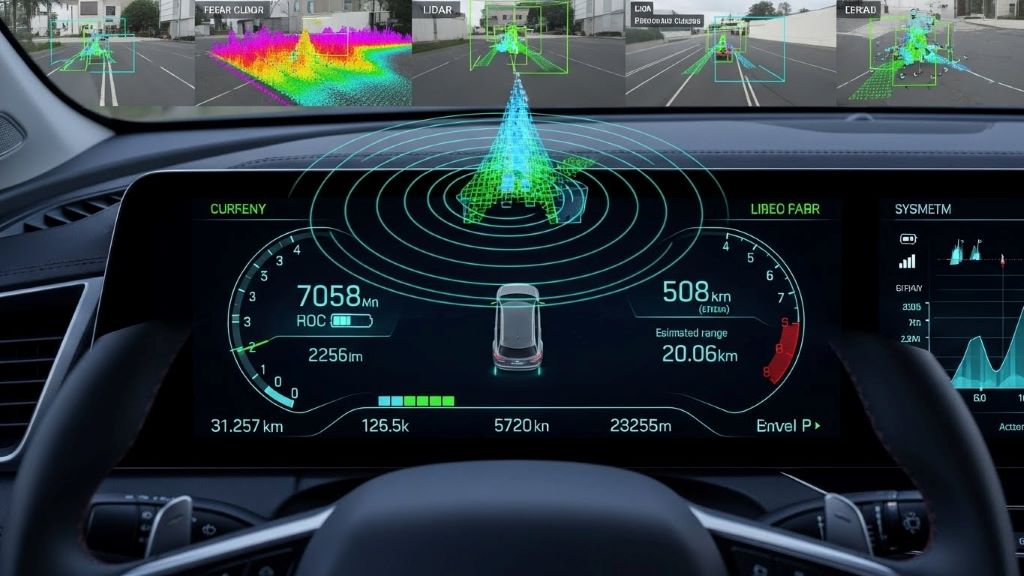
Sensors form the foundation of telemetry systems. LiDAR sensors create detailed 3D maps of the environment. Cameras capture visual information about road signs, lane markings, and traffic signals. Additionally, radar systems detect objects in various weather conditions. GPS units provide precise location data, while inertial measurement units track vehicle orientation and movement.
Data processing units analyze the incoming sensor information in real time. These powerful computers use artificial intelligence and machine learning algorithms to interpret telemetry data. They identify patterns, predict potential hazards, and determine appropriate driving responses.
Communication systems transmit telemetry data between the vehicle and external networks. This connectivity enables remote monitoring, software updates, and coordination with other vehicles. However, these systems must balance data transmission with cybersecurity concerns.
How Telemetry Enables Safe Autonomous Driving
Safety represents the primary concern for autonomous vehicle development. Telemetry technology addresses this challenge through constant monitoring and rapid response capabilities.
Real-time data collection allows autonomous vehicles to perceive their surroundings comprehensively. The telemetry system processes information from multiple sensors simultaneously. This redundancy ensures that if one sensor fails, others can compensate. Therefore, the vehicle maintains awareness even when individual components malfunction.
Predictive analytics enhance safety by anticipating potential dangers before they occur. Telemetry systems analyze patterns in traffic flow, pedestrian behavior, and road conditions. They calculate probabilities of various scenarios unfolding. Consequently, autonomous vehicles can take preventive actions to avoid accidents.
Emergency response protocols activate when telemetry detects critical situations. The system can execute emergency braking, evasive maneuvers, or safe stops within milliseconds. This speed far exceeds human reaction times, potentially preventing many collisions.
Data Management and Cloud Connectivity
The volume of data generated by autonomous vehicles presents significant challenges. A single self-driving car can produce several terabytes of data daily. Managing this information efficiently requires sophisticated systems.
Edge computing processes critical data directly within the vehicle. This approach reduces latency for time-sensitive decisions. The vehicle’s onboard computers handle immediate driving tasks without waiting for cloud communication. Additionally, edge computing continues functioning even when internet connectivity drops.
Cloud platforms store and analyze long-term telemetry data. Manufacturers use this information to improve vehicle performance and develop better algorithms. Furthermore, cloud systems enable fleet management for companies operating multiple autonomous vehicles.
According to MIT Technology Review, the integration of cloud computing with vehicle telemetry has accelerated the development of autonomous driving capabilities significantly. This combination allows continuous learning and improvement across entire vehicle fleets.
Telemetry’s Role in Vehicle-to-Everything Communication
Vehicle-to-everything (V2X) communication expands telemetry beyond individual cars. This technology enables autonomous vehicles to exchange information with infrastructure, other vehicles, and pedestrians.
Vehicle-to-vehicle communication shares telemetry data between nearby cars. When one autonomous vehicle detects an obstacle or hazard, it warns others in the vicinity. This cooperative approach creates a network of awareness that enhances overall traffic safety.
Vehicle-to-infrastructure communication connects cars with traffic signals, road sensors, and smart city systems. Traffic lights can adjust timing based on real-time vehicle telemetry. Road conditions monitored by infrastructure sensors feed directly into vehicle navigation systems. Therefore, autonomous vehicles can optimize routes and reduce congestion.

Cybersecurity Considerations for Telemetry Systems
The constant transmission of telemetry data creates potential vulnerabilities. Protecting these systems from cyber threats remains essential for autonomous vehicle safety.
Encryption protocols secure data transmission between vehicles and external networks. Advanced cryptographic methods prevent unauthorized access to telemetry information. However, manufacturers must regularly update these protections as hacking techniques evolve.
Authentication systems verify that data comes from legitimate sources. This prevents malicious actors from injecting false telemetry information into vehicle systems. Multi-layered security approaches combine hardware and software protections for comprehensive defense.
Regulatory Framework and Standards
Government agencies worldwide are developing regulations for autonomous vehicle telemetry. These standards ensure consistency, safety, and privacy protection across the industry.
Data privacy regulations govern how manufacturers collect, store, and use telemetry information. Personal driving patterns and location data require careful handling. Companies must balance operational needs with user privacy rights. Additionally, transparency about data usage builds public trust in autonomous technology.
The National Highway Traffic Safety Administration has established guidelines for autonomous vehicle testing and deployment, including specific requirements for telemetry systems and data reporting. These regulations continue evolving as the technology advances.
Future Developments in Telemetry Technology
Innovation in telemetry systems continues accelerating. Several emerging trends promise to enhance autonomous vehicle capabilities further.
Artificial intelligence integration will make telemetry systems smarter and more adaptive. Machine learning algorithms will improve at interpreting complex scenarios. Neural networks will recognize patterns that current systems miss. Consequently, autonomous vehicles will handle increasingly challenging driving conditions.
5G connectivity will dramatically increase data transmission speeds. This advancement enables real-time sharing of high-resolution sensor data between vehicles. Lower latency improves coordination for cooperative driving maneuvers. Therefore, entire traffic networks can operate more efficiently.
Quantum computing may eventually revolutionize telemetry data processing. These powerful systems could analyze vast datasets instantaneously. However, practical quantum computers for vehicles remain years away from commercial deployment.
Conclusion
Telemetry technology forms the backbone of autonomous vehicle systems. It enables real-time data collection, processing, and communication essential for safe self-driving operations. From sensor networks to cloud connectivity, telemetry systems integrate multiple components into cohesive platforms. Additionally, ongoing developments in artificial intelligence, connectivity, and cybersecurity continue advancing these capabilities. As autonomous vehicles become more prevalent, telemetry technology will remain central to their evolution. Understanding these systems helps us appreciate the complexity behind seemingly simple autonomous driving experiences.
Frequently Asked Questions
What types of data do autonomous vehicle telemetry systems collect?
Telemetry systems collect various data types including vehicle speed, location coordinates, sensor readings from cameras and LiDAR, steering inputs, braking patterns, and diagnostic information about component health. They also gather environmental data like weather conditions and traffic patterns.
How does telemetry improve autonomous vehicle safety?
Telemetry enhances safety through continuous monitoring of vehicle surroundings, redundant sensor systems that compensate for individual failures, predictive analytics that anticipate hazards, and rapid emergency response capabilities that exceed human reaction times.
Can hackers access autonomous vehicle telemetry systems?
While cybersecurity risks exist, manufacturers implement multiple protection layers including encryption, authentication protocols, and secure communication channels. Regular security updates and monitoring help defend against evolving threats, though no system can be completely invulnerable.
How much data does an autonomous vehicle generate daily?
A single autonomous vehicle typically generates between 4 to 20 terabytes of data per day, depending on the number and types of sensors installed. This massive volume requires sophisticated data management strategies combining edge computing and cloud storage.
Do autonomous vehicles share telemetry data with other cars?
Yes, through vehicle-to-vehicle (V2V) communication systems. Autonomous vehicles share relevant telemetry data with nearby cars to improve collective awareness of road conditions, hazards, and traffic patterns. This cooperative approach enhances safety for all vehicles in the network.
Related Topics: